
Citation context analysis
Reads the passages where a paper is cited and keeps the surrounding sentences with the record.
Research discovery
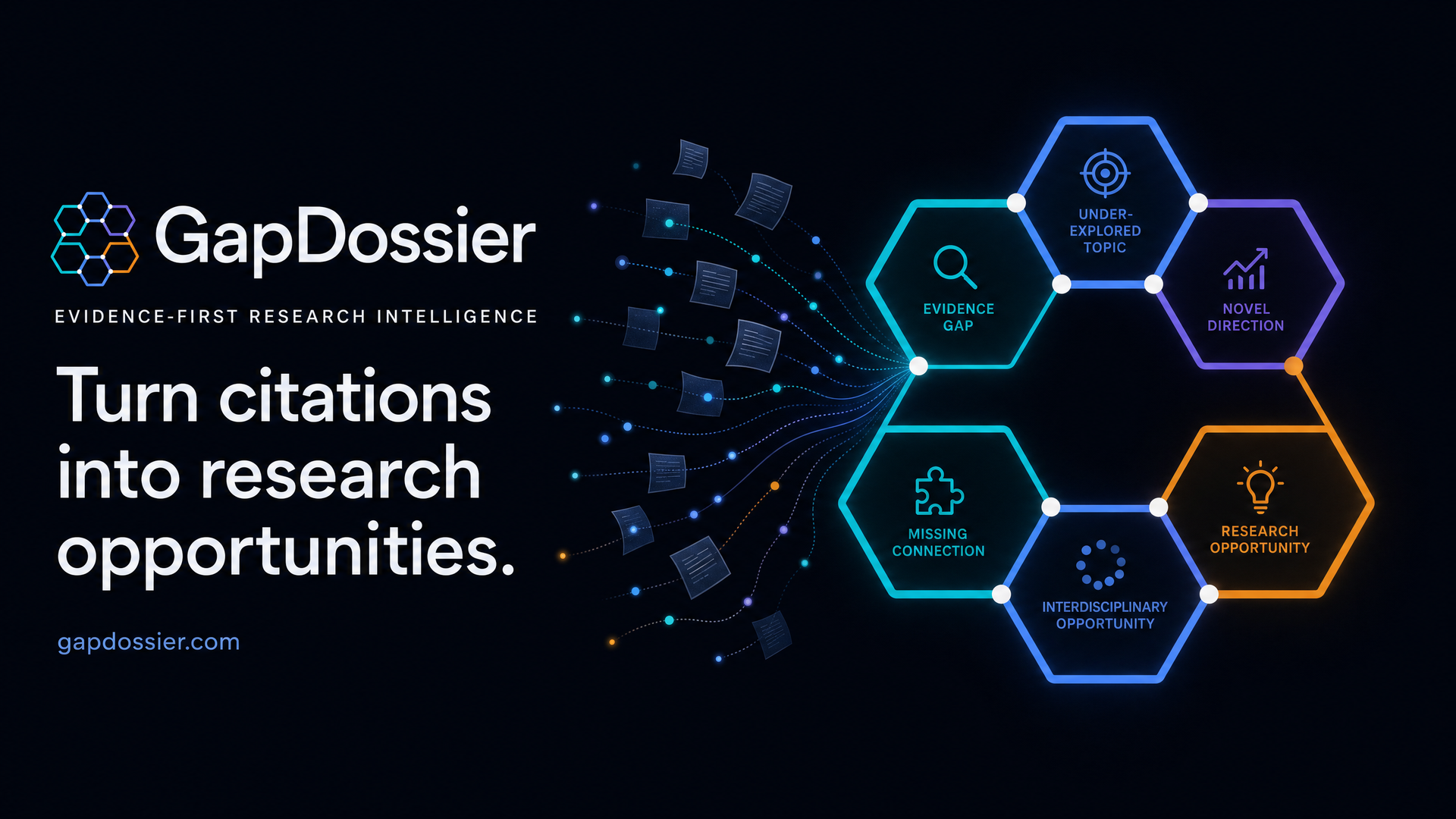
GapDossier helps you find the next worthwhile question faster by analyzing citation context, mapping the literature, and surfacing gaps worth exploring.
Citation context → evidence map
Research decisions deserve traceable evidence. GapDossier shows the citation context behind every observation, records where each field came from, and keeps illustrative material clearly separated from live results.
Start from a publication identifier you already have, and GapDossier locates the publication behind it.
Check the publication details before anything runs, so the analysis starts from the right source.
GapDossier collects the later work that cites the paper and keeps the surrounding context attached.
Read the citation context, see where sources disagree or coverage is thin, and decide what to explore next.
Each capability describes what GapDossier does with the sources it retrieves.
Reads the passages where a paper is cited and keeps the surrounding sentences with the record.
Organizes citing and related work into a connected view of the field around your seed paper.
Points to areas where the retrieved sources carry little or no supporting evidence.
Highlights places where sources disagree, and preserves both positions rather than resolving them for you.
Orders candidate directions and shows the factors behind each position.
Keeps each analysis addressable so you can return to it, review it, and continue from where you stopped.